Handoff notes Meal prep for nurses works best as one cook-up the day before a block of three 12-hour shifts. Cooked meat, soups and salads keep 3 to 4 days in the fridge, per the FoodSafety.gov chart, so freeze the third shift’s portion. Pack lunch with two cold sources, or choose foods that need none.
Three long shifts in a row leave no evening for cooking, and on nights the cafeteria can be closed by the time the long break comes round. This guide is for anyone who works 12s, days or night shift, and wants meal prep that leaves a bag packed before the alarm goes off. It sticks to timing, packing and food safety, with the “keeps until” numbers taken from the government charts rather than guessed.
What does meal prep for nurses look like on a three-shift week?
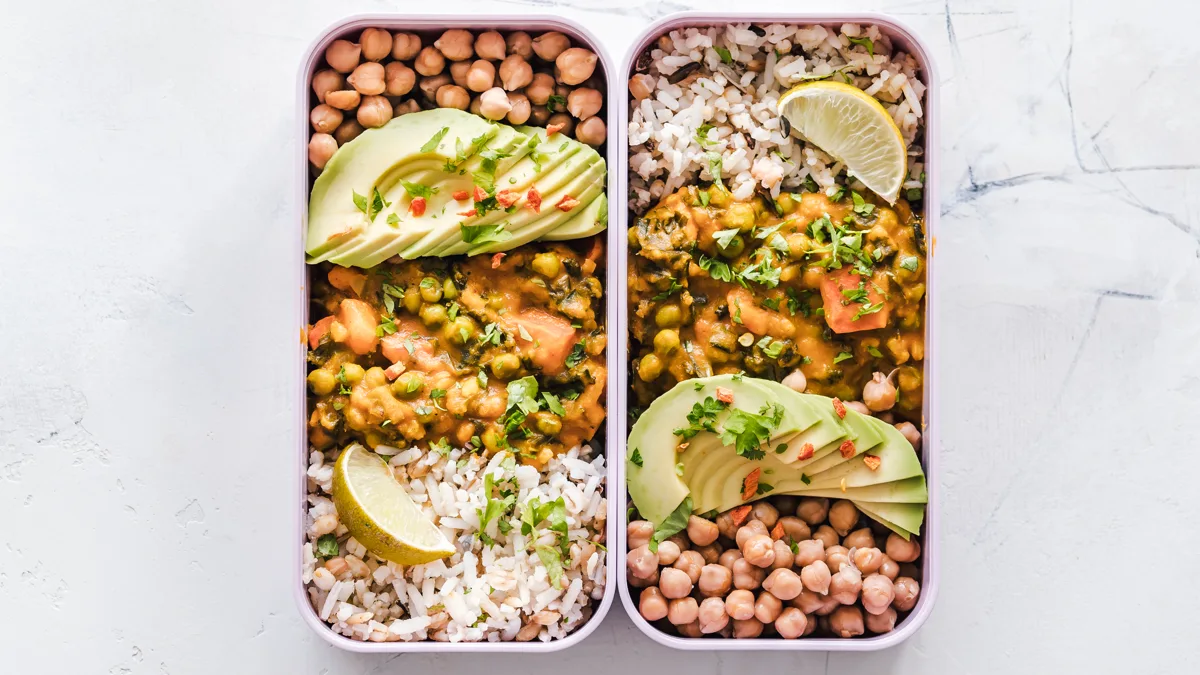
Meal prep for nurses on a three-shift week is usually one cooking session the day before the block, three days of meals split into containers, and a separate plan for the last shift’s food. The aim is a bag you can grab on the way out, not a fresh dinner every evening after a 12.
The format that comes up again and again in nursing threads is simple. In a r/nursing thread on shift food, one of the most upvoted replies, with about 290 votes, describes cooking before each block of shifts using three parts: a saucy meat, a vegetable and a carb, mixed and matched so the week does not taste the same twice, then about three minutes in the microwave on the break.
That breaks down into a short shopping list:
- One main cooked in bulk: a tray of chicken thighs, a pot of chili or a pan of meatballs in sauce.
- One vegetable that reheats well: roasted broccoli, green beans or peppers and onions.
- One starch: rice, pasta, potatoes or tortillas.
- Grab-and-go extras: whole fruit, crackers, cheese and something for the drive home.
Raw chicken or turkey pieces only keep 1 to 2 days in the fridge, according to the FoodSafety.gov cold storage chart, so buy them no earlier than the day before prep day, or freeze them as soon as you get home.
When should you cook, and how long does it keep?
Cook on the day before the first shift, get everything into the fridge within two hours, and plan to finish the refrigerated food within 3 to 4 days. The FoodSafety.gov cold storage chart gives cooked meat or poultry leftovers, soups and stews, and egg, chicken, tuna or macaroni salads that same window at 40°F or below.
That window is where a three-shift block gets tight. Cook on Sunday for three day shifts and Wednesday’s lunch is day 3, which is fine. Cook on Sunday for three night shifts and the main meal of the third night is eaten in the early hours of Thursday, day 4, the very edge of the range. The easy fix is to freeze the third shift’s portion on prep day and move it to the fridge after the first shift so it can thaw.
| Day | What to cook or pack | Keeps until (FoodSafety.gov chart) |
|---|---|---|
| Prep day | Cook the main dish and a pot of soup or chili; split into shallow containers | Cooked meat or poultry: 3 to 4 days in the fridge. Soups and stews: 3 to 4 days |
| Prep day | Boil a batch of eggs for snacks | Hard-cooked eggs: 1 week in the fridge; do not freeze |
| Shift 1 | Eat the cold salad first: chicken, tuna, egg or pasta salad | 3 to 4 days; the chart says these do not freeze well |
| Shift 2 | Main dish from the fridge batch; move the frozen shift 3 portion to the fridge tonight | Still inside the 3 to 4 day window |
| Shift 3 | The portion frozen on prep day, now thawed in the fridge | Freezer: cooked meat or poultry 2 to 6 months, soups and stews 2 to 3 months, both for quality |
| Any shift | Deli-sliced lunch meat for wraps | 3 to 5 days once opened or sliced |
The day labels assume three shifts in a row with prep the day before. Swap in your own rota; the rule underneath stays the same.
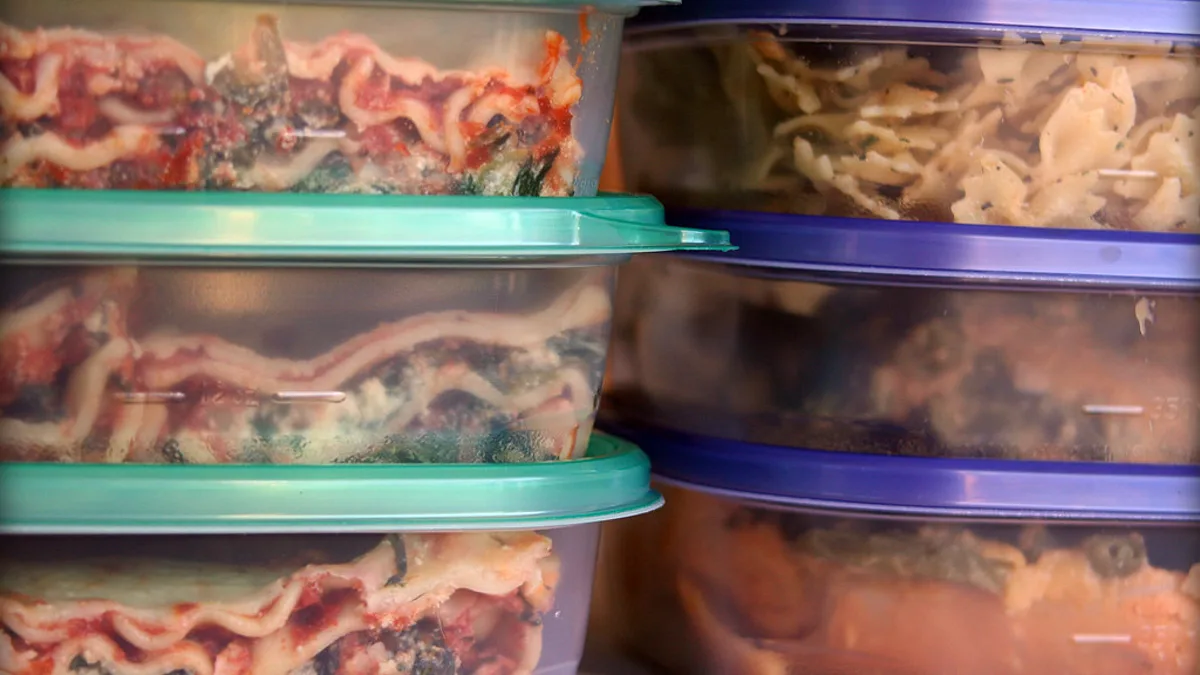
The freezer numbers are about taste, not safety. The FoodSafety.gov chart notes that food held continuously at 0°F or below can be kept indefinitely, and the time limits are for quality. Thawing is where care matters. The USDA Food Safety and Inspection Service lists three safe ways to thaw: in the fridge, in cold water, or in the microwave. Its leftovers guidance says food thawed in the fridge should be eaten within 3 to 4 days, which is why moving the shift 3 box after the second shift works so neatly.
How do you keep a packed lunch cold for a 12-hour shift?
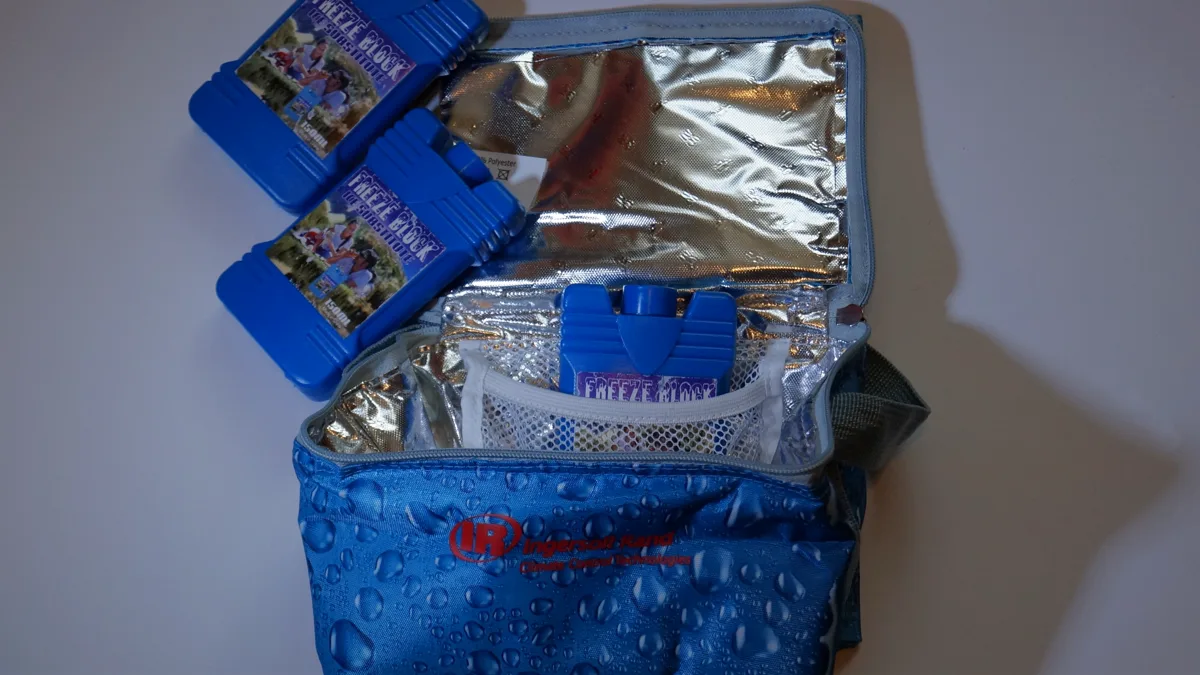
A packed lunch stays cold with at least two cold sources, according to the USDA Food Safety and Inspection Service: two frozen gel packs, each at least 5 by 3 inches, or one gel pack with a frozen water bottle or juice box. One goes above the food and one below it, and the bag stays shut until the break.
If the unit has a fridge, the same USDA packed-lunch guidance says to put perishable food in it when you arrive, and to leave an insulated bag open inside the fridge so the cold air reaches the food. The catch is space. In a r/nursing lunch-box thread, a reply with nearly 190 votes teased the colleague who brings a suitcase into the staff fridge, and the answer that came back was practical: after food kept going missing, that nurse switched to one large ice pack and kept the bag in a locker instead.
Either way works if the cold sources are frozen solid. A quick check before you leave:
- Two gel packs frozen overnight, or one pack plus a frozen water bottle
- Lidded containers with the prep date written on the lid
- One portion per break, so nothing perishable rides home half eaten
- A fork, a napkin and a bag for the empty containers
- A shelf-stable backup, like crackers and peanut butter, for the day the break moves
- Your name on the bag, inside and out
The USDA also says it is fine to make lunch the night before, as long as the bag itself is packed right before you leave home. Frozen sandwiches help keep a bag cold, though the same page suggests adding mayonnaise, lettuce and tomato after thawing, not before.
What can you pack when there is no fridge or microwave?
With no fridge or microwave, build the bag from foods the USDA says need no cold source at all: peanut butter and jelly, bread, crackers and chips, hard cheese, canned tuna or chicken, pickles and mustard, and whole fruit or whole vegetables. Hot food can travel in a preheated insulated food jar.
Whole fruit is the easy win, and nurses joke about it. The top reply in the r/nursing shift-food thread, with more than 1,200 votes, is about an apple that rides from the home fridge to the work fridge and back again every shift without ever being eaten. It is funny because it is true, and it is also the one item in the bag that never needs a plan.
Snack boxes need more care than they look. In a r/nursing thread on go-to work lunches, one popular reply described “adult lunchables” of crackers, cured meats, cheese and grapes. The USDA warns that prepackaged combos with luncheon meat, cheese or cut fruit still have to stay cold, even with preservatives, so a homemade snack box belongs with the gel packs, while plain crackers and whole grapes can ride loose.
For a hot meal without a microwave, the USDA’s method for an insulated food jar is short:
- Fill the empty jar with boiling water and let it stand for a few minutes.
- Pour the water out.
- Add soup, chili or stew that is piping hot from the stove.
- Keep the lid closed until the break, so the food stays at 140°F or above.
The same two-hour limit that governs a break-room potluck on a long shift applies to your own lunch: perishable food should not sit at room temperature for more than 2 hours, or 1 hour above 90°F, according to the USDA.
Night shift lunch ideas that fit two breaks
Night shift lunch ideas work best split across two breaks: something small and cold for the first one, and the main meal for the long break in the early hours. Plenty of nights staff in public nursing threads eat a full meal at home before they leave, so the bag only has to carry the shift itself.
Ideas that nurses on nights mention again and again:
- Overnight oats made in jars on prep day, eaten cold on the first break.
- A casserole, such as the tater tot casserole one r/nursing reply named for nights. Like other cooked meat leftovers, it keeps 3 to 4 days in the fridge on the FoodSafety.gov chart, so it suits the first two nights.
- Freezer breakfast sandwiches on English muffins. A reply in the same go-to lunches thread said a batch of 12 takes about 30 minutes and lasts for weeks in the freezer.
- Soup or chili in an insulated jar for the long break, when the microwave queue is the last thing you want.
Two small courtesies from a nurse’s three-shift prep post on r/MealPrepSunday, which the poster said took about an hour start to finish. One commenter said pesto holds up on reheating better than cream sauces, which tend to split. Another said microwaving fish in the break room is off limits, and the reply agreed: that meal is the one eaten at home.
On a run of night shift work, the day-4 problem from the table is real. The third night’s main meal is the one to freeze.
Which containers and reheating habits make the week easier?
Shallow, lidded containers make the week easier because food cools faster in them, which the USDA says is the reason to divide large batches before they go in the fridge. For the break-room microwave, a covered glass or ceramic dish with the lid vented heats more evenly than a sealed tub.
A big pot of soup cooling on the counter is the classic mistake. The USDA leftovers page says a large pot takes a long time to cool and invites bacteria, so split it into smaller containers first; hot food can go straight into the fridge. For the freezer, lay portions flat. The USDA’s freezing guidance says food 2 inches thick should freeze in about 2 hours, and packages should be spread out in one layer and stacked only once frozen solid.
Reheating on a break has a few rules worth keeping in mind:
- Heat leftovers until they reach 165°F, the USDA’s reheating temperature, checked in a few places because microwaves leave cold spots.
- Bring soups and sauces to a rolling boil, as the USDA advises for those dishes.
- Cover the food, turn or stir it as it heats, and give it a short rest before eating, as the USDA suggests.
- Frozen portions can go straight in without thawing, the USDA says; they just take longer.
A strip of masking tape and a marker on each lid, with the dish and the prep date, settles the “is this still good?” question at 3 in the morning.
Asked at handover
Is it safe to keep lunch in a locker all shift?
Only with cold sources, or with food that needs none. The USDA says perishable food should not sit out more than 2 hours, so a locker bag needs two frozen gel packs, or should carry only shelf-stable items like crackers, whole fruit and peanut butter.
Can you freeze chicken salad or pasta salad with mayonnaise?
Not well. The FoodSafety.gov chart gives egg, chicken, ham, tuna and macaroni salads 3 to 4 days in the fridge and marks them as not freezing well, so eat them on the first shift of the block.
How long do hard-boiled eggs last for shift snacks?
One week in the fridge, according to the FoodSafety.gov chart, which also says not to freeze them. One batch boiled on prep day covers a whole block of shifts.
Do you need to thaw frozen meal prep before reheating it?
No. The USDA says frozen leftovers can be reheated without thawing in a microwave or saucepan; it just takes longer. Either way, heat the food until it reaches 165°F.
What should you do with food you didn’t eat on shift?
The USDA advises packing only what you will eat and throwing away leftover perishable food after the meal. Whole fruit and sealed shelf-stable snacks can come home and go back in tomorrow’s bag.
One cook, three shifts
Cook once the day before the block, keep the fridge food inside its 3 to 4 day window, and freeze whatever the last shift will eat. Pack the bag with two frozen cold sources, write the date on every lid, and keep one shelf-stable backup for the night the break never comes. If you’re shopping for someone who works 12s, a lunch bag that holds cold for a long day is one of the gifts for nurses that actually gets used, and a freezer meal dropped off before their first shift back, with a short handwritten note, might be even better.
How we researched this: every “keeps until” figure comes from the FoodSafety.gov cold storage chart, checked on October 4, 2026, and the packing, thawing and reheating steps from USDA Food Safety and Inspection Service pages; the meal ideas come from public nursing and meal-prep threads. The ideas are practical and non-clinical; nothing is medical advice. Early drafting was done with an AI tool, and the editor rewrote it for real break rooms and real schedules.
Sources: FoodSafety.gov cold storage chart; USDA FSIS packed-lunch guidance; USDA FSIS leftovers guidance; USDA FSIS freezing guidance.